PPC / Google Ads Services: Why Most Campaigns Waste Budget
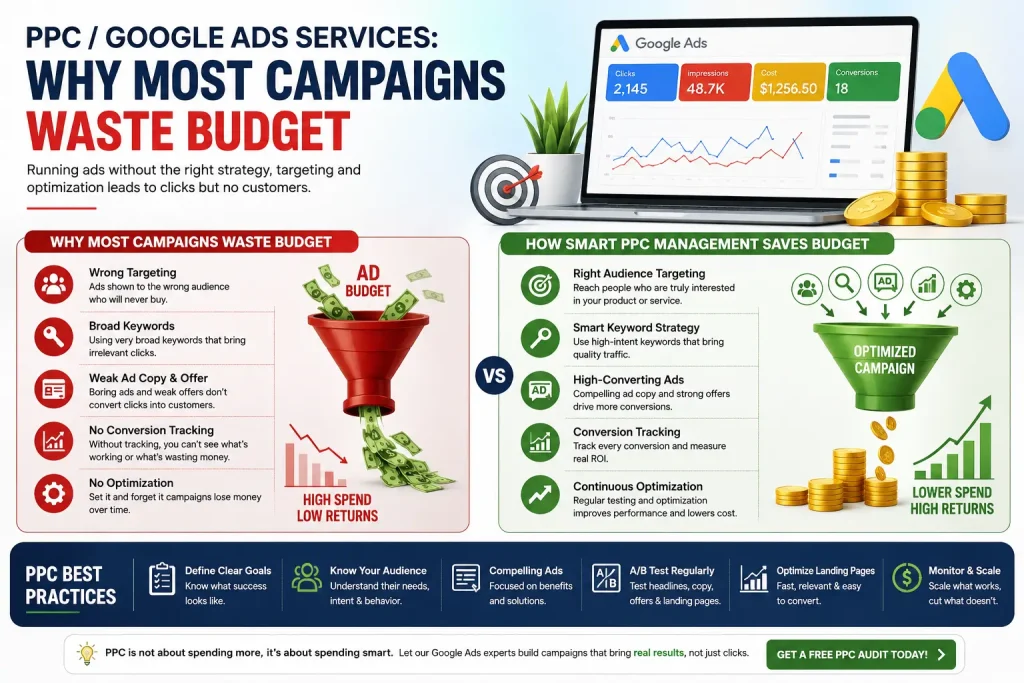
PPC / Google Ads Services: You turn on a Google Ads campaign; the budget starts going out daily, clicks show up in the dashboard — and yet, calls don’t increase, leads don’t come in, and sales stay flat. This is one of the most common frustrations businesses run into with PPC / Google Ads Services, and it rarely comes down to the platform not working. Usually, it comes down to a handful of setup and strategy mistakes quietly draining the budget.
PPC rewards precision far more than it rewards spending power. Running ads isn’t the same as running the right ads to the right audience, and that difference is exactly what separates campaigns that bring real customers from ones that just burn budget every month.
This article breaks down where most PPC campaigns go wrong and what actually makes them profitable.
Table of Contents
- The Real Pain Points of PPC Advertising
- What PPC / Google Ads Services Actually Involve
- Keyword Research: Bidding on the Right Terms
- Intent-based ad copy and landing pages
- Quality Score: The Hidden Factor Behind Your CPC
- Conversion Tracking: Knowing What Actually Works
- Types of Google Ads Campaigns Worth Running
- PPC and SEO: Why Do They Work Better Together
- Frequently Asked Questions
- Conclusion
The Real Pain Points of PPC Advertising
Before getting into strategy, it’s worth naming what actually frustrates businesses about this channel. If any of these sound familiar, this article is written for exactly that situation.
- You’re spending daily, but leads aren’t coming in. Clicks without conversions usually point to a targeting or landing page problem, not a budget problem.
- Your cost-per-click keeps climbing. A rising CPC over time is often a sign of a low quality score, not just competitive bidding.
- You don’t know which keywords are actually bringing customers. Without proper conversion tracking, it’s just guessing which parts of the campaign to scale and which to pause.
- Competitors with smaller budgets seem to rank above you. This usually comes down to ad relevance and landing page experience, not just how much they’re bidding.
- The account was created once, and after that, it was never used. A campaign left untouched for months almost always underperforms compared to one reviewed weekly.
None of these problems mean Google Ads doesn’t work for your business. They usually mean the setup and strategy need adjusting — and that’s exactly what proper PPC management is built to fix.
What PPC / Google Ads Services Actually Involve
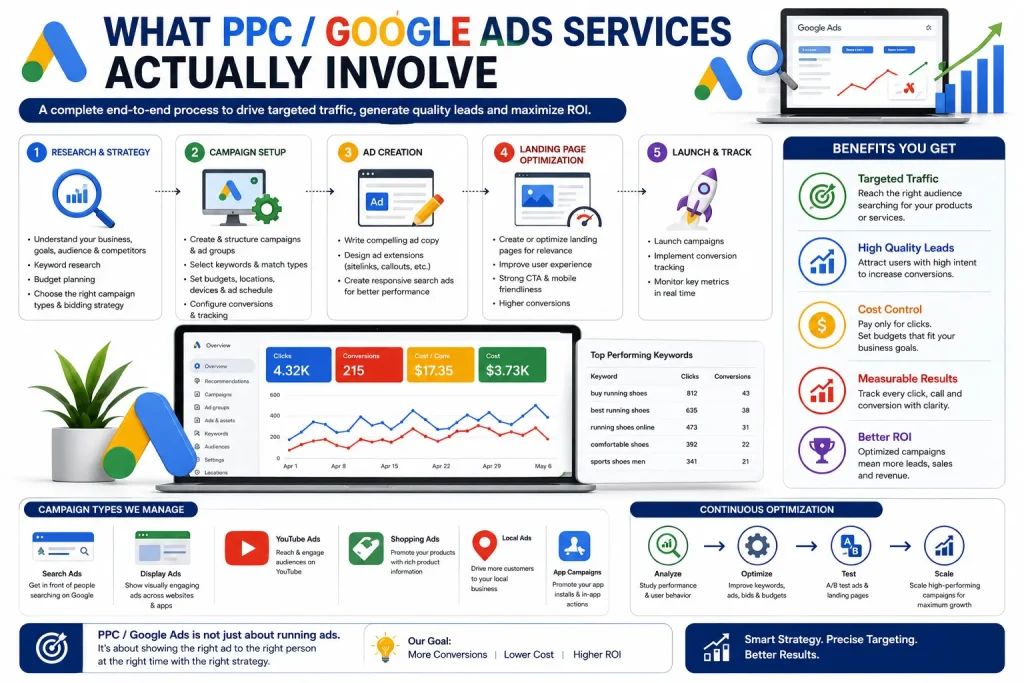
PPC / Google Ads Services aren’t just about creating an ad and picking a few keywords. It’s a mix of keyword research, bid management, ad copywriting, landing page alignment, and continuous tracking that all work together. Search, Display, Shopping, and Video campaigns each behave differently, which means a single generic setup rarely performs well across all of them.
Businesses that see real returns treat PPC as an ongoing process, not a one-time task, reviewing performance regularly instead of setting a campaign live and leaving it alone.
Keyword Research: Bidding on the Right Terms
Every keyword you bid on should have a clear reason to be in your campaign — either it shows strong buying intent or it supports the customer’s research journey. Bidding on broad, unrelated terms usually results in a campaign that spends fast but doesn’t actually bring in the right audience.
A simple approach that works well: separate high-intent keywords (people ready to buy) from research-stage keywords, and build negative keyword lists to stop your ads from showing for irrelevant searches. Skipping this step is one of the fastest ways to waste ad spend on clicks that were never going to convert.
Intent-Based Ad Copy and Landing Page
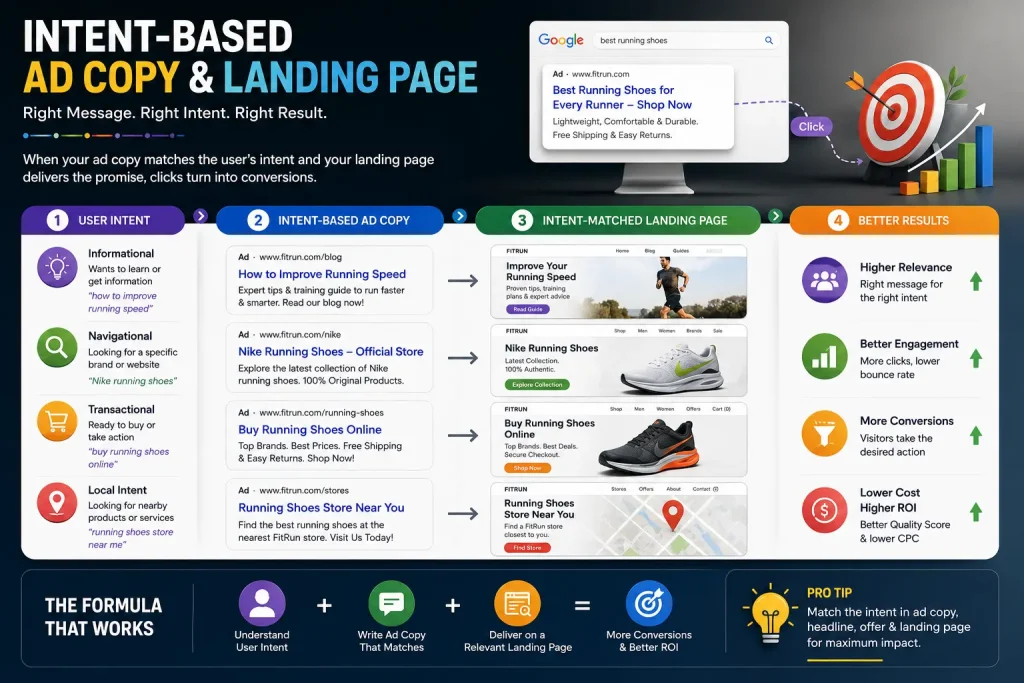
PPC / Google Ads Services: A smaller, well-matched audience clicking through to a relevant landing page is almost always more valuable than a large, mismatched one. High click numbers look good on paper, but if the ad copy doesn’t match what the landing page delivers, most visitors leave immediately — and Google notices this too, lowering your ad’s visibility over time when engagement stays weak.
Landing page relevance is a far more honest indicator of whether a campaign is working than raw click numbers ever will be.
Quality Score: The Hidden Factor Behind Your CPC
Quality Score isn’t built through bigger bids alone — it’s built through consistent relevance between your keywords, your ad copy, and your landing page content. Randomly changing ad messaging or sending all traffic to one generic page makes it harder for Google to see your ads as relevant, which pushes your CPC higher.
Relevance here compounds. A campaign that keeps its keywords, ads, and landing pages tightly aligned earns a stronger Quality Score and a lower cost-per-click than one that treats every ad group the same way.
Conversion Tracking: Knowing What Actually Works
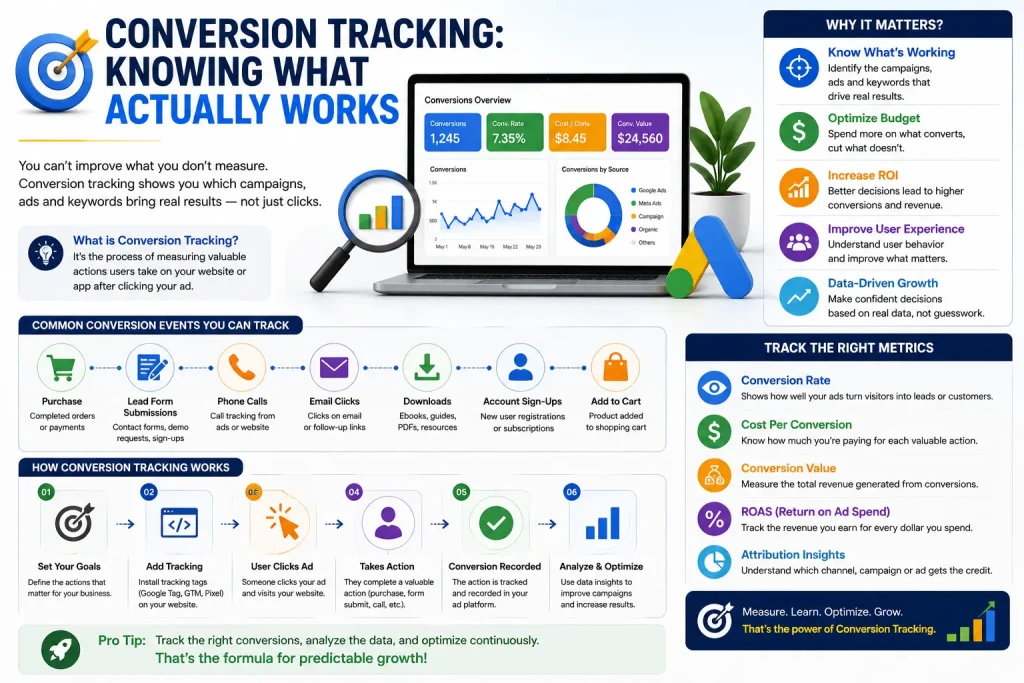
Conversion tracking works best when it’s set up to capture the actions that genuinely matter to your business — calls, form fills, purchases — not just clicks or impressions. A campaign without proper tracking is essentially being managed on guesswork rather than real data.
PPC / Google Ads Services Your biggest mistake here is considering impressions or clicks alone as the yardstick for success. A campaign that generates plenty of clicks but no tracked conversions rarely justifies its spend, no matter how much traffic it brings in.
Types of Google Ads Campaigns Worth Running
Organic reach through SEO takes time to build, which is exactly why PPC campaigns have become a necessary complement to organic strategy rather than an optional extra. Search Ads, Shopping Ads, Display Ads, Video Ads, and Remarketing Ads each let you reach audiences at different stages — something organic content alone can’t guarantee immediately.
The key is treating each campaign type as part of a broader plan, not a standalone fix. Ads promoting an unclear offer rarely perform well, regardless of which campaign type they’re running on.
PPC and SEO: Why Do They Work Better Together
PPC / Google Ads Services There’s a common myth that businesses should choose between PPC and SEO. In reality, running both together often outperforms relying on either alone. PPC brings immediate, targeted traffic while SEO builds long-term, sustainable visibility in the background.
PPC / Google Ads Services. That said, PPC does need ongoing management — not a “set once and forget” approach, but continuous review so the budget keeps going toward what’s actually converting. Finding the right balance between paid and organic spend usually beats putting the entire budget into one channel.
Frequently Asked Questions
How much budget do I need to start with Google Ads? There’s no fixed minimum. A small daily budget can be scaled up gradually once you see which keywords and ads are converting well.
How soon will I see results from PPC? Google Ads can bring traffic within hours of launching, but it usually takes a few weeks of optimization to get the best cost-per-click and conversion rates.
What’s the difference between PPC and SEO? PPC gives immediate, paid visibility on search engines, while SEO builds free, organic visibility over time. PPC requires ongoing spend, while SEO results tend to last longer without direct ad costs.
Do I need a website to run Google Ads? In most cases, yes. You need a website or landing page to send traffic to, since ads without a destination page can’t track or convert visitors properly.
Can I target only my local area with Google Ads? Yes, Google Ads allows location targeting down to a city, pin code, or even a radius around a business location, making it well-suited for local businesses.
Conclusion
PPC / Google Ads Services rarely fail because of one big mistake — they usually fail because of small, avoidable ones stacking up quietly: broad keyword targeting, mismatched landing pages, or no conversion tracking at all. None of these individually ruin a campaign, but together, they add up to budget spent without real business results.
PPC / Google Ads Services: The fix isn’t spending more — it’s bidding with intention, tracking what actually converts, and treating the account as an ongoing process rather than a one-time setup. Get those fundamentals right, and Google Ads stops being a budget drain and starts becoming a genuine lead-generation channel.
Contact us- Contact