Social Media Marketing: 5 Costly Mistakes Killing Engagement
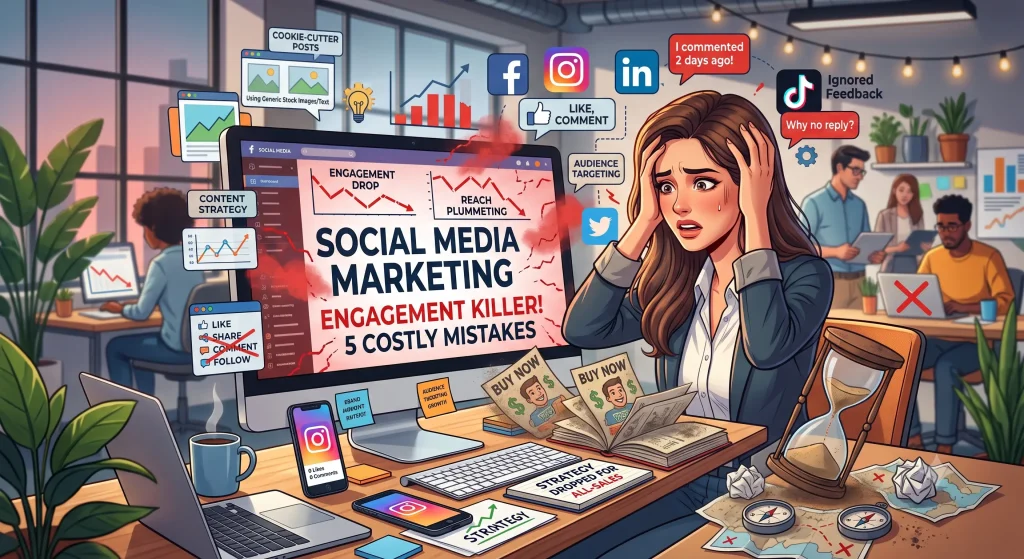
You’re posting consistently, the graphics look good, captions are thought through — and still, the likes barely move, comments stay empty, and followers don’t turn into customers. This is one of the most common frustrations businesses run into with Social Media Marketing, and it rarely comes down to bad luck or an unfair algorithm. Usually, it’s a handful of fixable mistakes quietly working against the effort being put in.
Social media rewards strategy far more than it rewards activity. Posting often isn’t the same as posting with purpose, and that difference is exactly what separates accounts that grow steadily from ones that stay stuck no matter how much content goes out.
This article breaks down where most social media efforts go wrong, and what actually moves the needle.
Table of Contents
- The Real Pain Points of Social Media Marketing
- What Social Media Marketing Actually Involves
- Content Strategy: Posting With a Purpose
- Engagement Rate Matters More Than Follower Count
- Building Real Brand Awareness
- Influencer Marketing Done Right
- When Paid Social Ads Make Sense
- Consistency vs. Quality: Finding the Balance
- Frequently Asked Questions
- Conclusion
The Real Pain Points of Social Media Marketing
Social Media Marketing Before getting into strategy, it’s worth naming what actually frustrates businesses about this channel. If any of these sound familiar, this article is written for exactly that situation.
- You post consistently, but engagement stays flat. Regular posting alone doesn’t guarantee growth — the platform’s algorithm rewards relevance and interaction, not just frequency.
- Your follower count grows, but sales don’t. Vanity metrics like followers can look impressive while doing almost nothing for actual business results.
- You don’t know what content actually works. Without tracking performance properly, it’s just guessing which posts to make more of and which to drop.
- Competitors with fewer followers seem to get more engagement. This usually comes down to content strategy and audience targeting, not luck.
- Paid ads feel like money disappearing with no clear return. Ads run without a clear strategy or targeting often generate impressions without generating actual leads.
None of these problems mean social media doesn’t work for your business. They usually mean the approach needs adjusting — and that’s exactly what a proper strategy is built to fix.
What Social Media Marketing Actually Involves
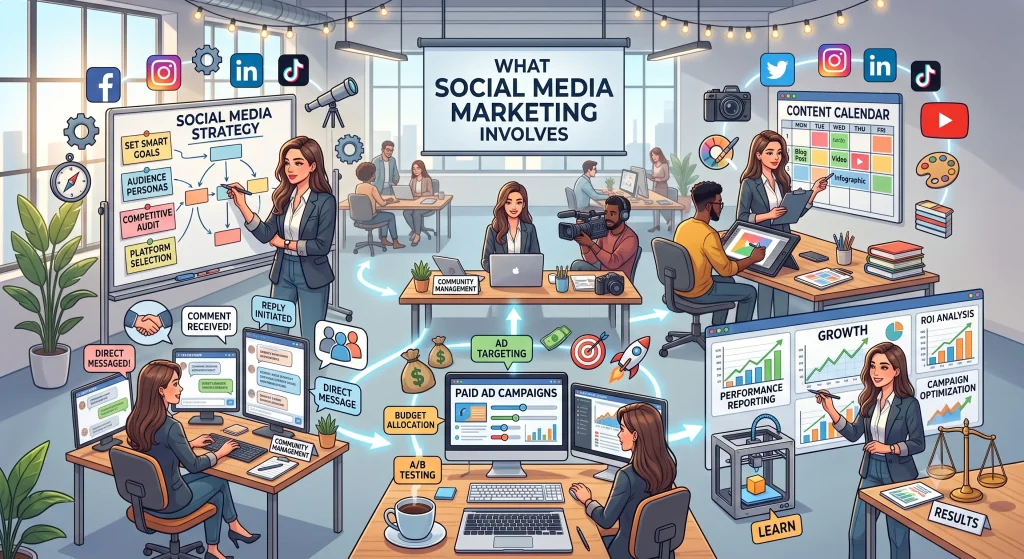
Social Media Marketing isn’t just posting content and hoping it performs. It’s a mix of content strategy, community engagement, paid promotion, analytics, and platform-specific tactics that all work together. Each platform — Instagram, Facebook, LinkedIn, and others — has its own algorithm, audience behavior, and content style, which means a single generic approach rarely performs well across all of them.
The businesses that see real growth treat each platform as its own channel with its own strategy, rather than copy-pasting the same content everywhere and hoping something sticks.
Content Strategy: Posting With a Purpose
Every post should have a clear reason to exist — educating, entertaining, building trust, or directly promoting an offer. Posting without a clear purpose behind each piece of content usually results in a feed that looks busy but doesn’t actually build a relationship with the audience.
Social Media Marketing A simple framework that works well: mix educational content (tips, how-tos), engagement content (questions, polls, relatable posts), and promotional content (offers, product highlights) instead of leaning entirely on one type. Audiences tend to disengage quickly from accounts that only sell, and equally lose interest in accounts that never get around to mentioning what they actually offer.
Engagement Rate Matters More Than Follower Count
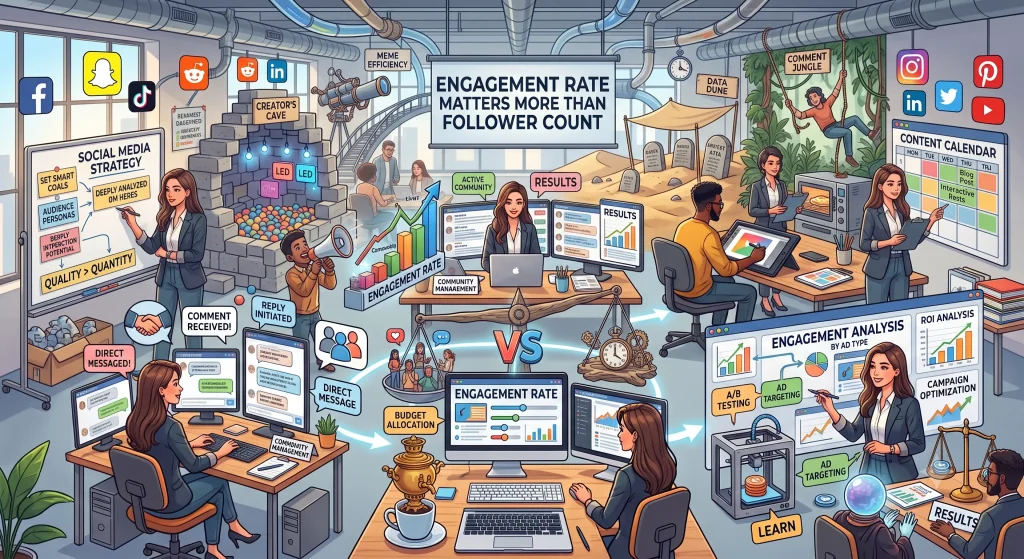
A smaller, engaged audience is almost always more valuable than a large, passive one. High follower counts look good on paper, but if only a fraction of them ever like, comment, or share, that audience isn’t actually paying attention — and algorithms notice this too, showing content to fewer people over time when engagement stays low.
Engagement rate — the percentage of your audience actually interacting with your content — is a far more honest indicator of whether your strategy is working than raw follower numbers ever will be.
Building Real Brand Awareness
Brand awareness on social media isn’t built through occasional viral posts — it’s built through consistent visual identity, tone of voice, and messaging that makes your brand instantly recognizable, even without a logo in sight. Randomly changing style, tone, or visual identity from post to post makes it harder for an audience to build familiarity with a brand over time.
Consistency here compounds. An account that looks and sounds the same across months builds a stronger, more trustworthy presence than one that reinvents itself every few weeks chasing whatever’s trending.
Influencer Marketing Done Right
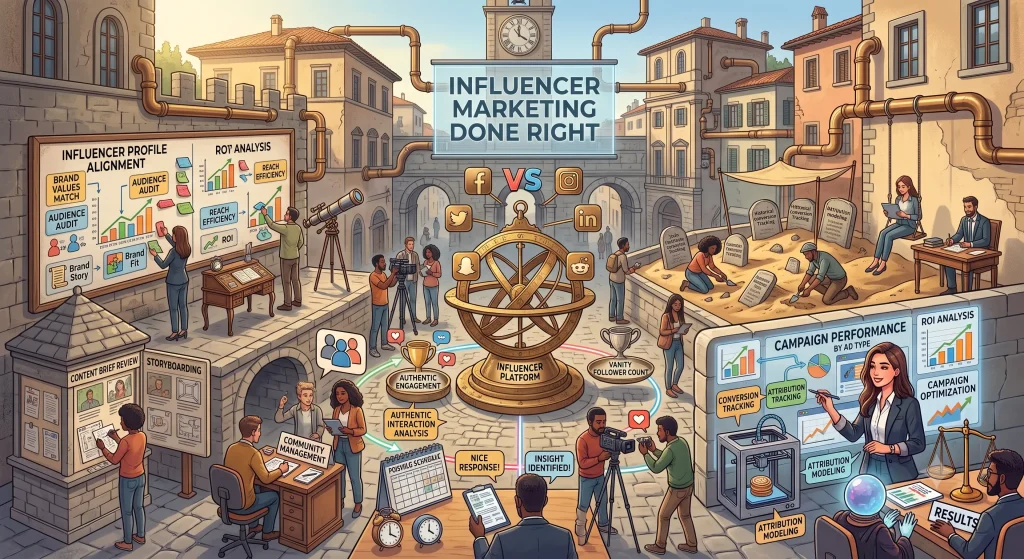
Influencer marketing works best when the influencer’s audience genuinely overlaps with your target customer — not simply based on follower count. A smaller, niche influencer with a highly engaged, relevant audience often delivers better results than a large influencer with a broad, disconnected one.
The biggest mistake here is treating influencer marketing purely as a numbers game. A partnership that feels forced or clearly disconnected from the influencer’s usual content rarely converts, no matter how large their following is.
When Paid Social Ads Make Sense
Social Media Marketing Organic reach on most platforms has declined significantly over the years, which is exactly why paid social ads have become a necessary complement to organic content rather than an optional extra. Paid ads let you target specific audiences precisely — by interest, behavior, location, and more — something organic posting simply can’t guarantee.
The key is treating paid ads as an extension of a broader strategy, not a standalone fix. Ads promoting weak or unclear offers rarely perform well, regardless of how precise the targeting is behind them.
Consistency vs. Quality: Finding the Balance
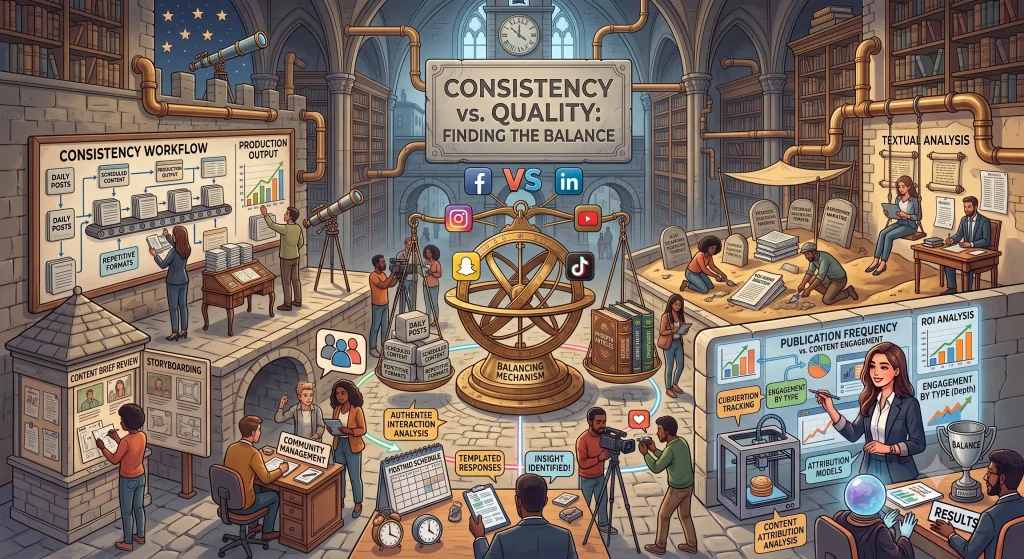
There’s a common myth that posting daily is necessary for growth. In reality, a smaller number of genuinely well-thought-out posts each week often outperforms daily low-effort content. Quality and relevance matter more to both audiences and algorithms than sheer volume.
That said, consistency does matter — not in the sense of posting constantly, but in the sense of staying visible often enough that an audience doesn’t forget a brand exists between posts. Finding a realistic, sustainable posting rhythm usually beats an ambitious schedule that burns out within a month.
Frequently Asked Questions
How often should a business post on social media? There’s no universal number. Three to five well-planned posts a week generally outperforms daily posting done without a clear strategy behind each piece of content.
Which social media platform is best for business growth? It depends entirely on where your target audience spends time. B2B businesses often see better results on LinkedIn, while consumer brands typically perform better on Instagram or Facebook.
Is organic social media marketing still effective without paid ads? Yes, though it’s become harder over the years. Organic content still builds trust and community, but pairing it with paid ads usually accelerates growth significantly faster than organic alone.
How long does it take to see real results from social media marketing? Meaningful engagement growth typically takes eight to twelve weeks of consistent, strategic posting. Follower growth tends to follow engagement, not the other way around.
Do I need a large budget to see results from Social Media Marketing? Not necessarily. A smaller, well-targeted budget spent strategically often outperforms a larger budget spread across unclear campaigns without a defined audience or goal.
Conclusion
Social Media Marketing rarely fails because of one big mistake — it usually fails because of small, avoidable ones stacking up quietly: content with no clear purpose, chasing follower counts instead of engagement, or running ads without a real strategy behind them. None of these individually ruin a brand’s presence, but together, they add up to effort that never quite translates into growth.
The fix isn’t posting more — it’s posting with intention, tracking what actually works, and treating each platform as its own channel rather than a copy-paste exercise. Get those fundamentals right, and social media stops being a guessing game and starts becoming a genuine growth channel.
Contact us- Contact