Facebook and Instagram Ads
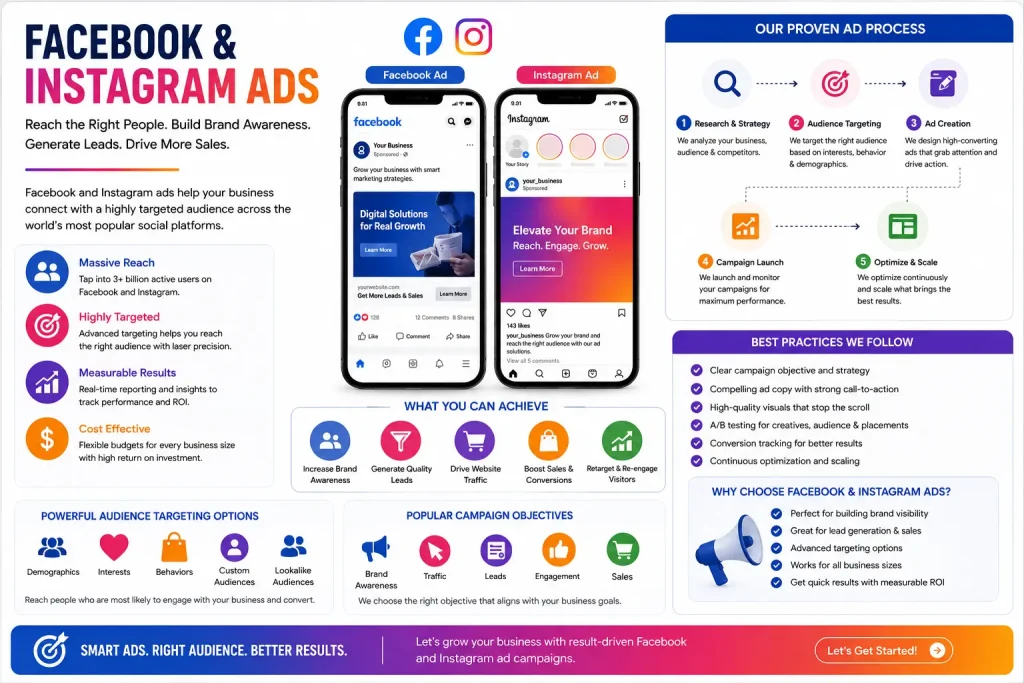
If you have ever boosted a post and watched the likes roll in but the sales never came, you already know that Facebook and Instagram Ads are not as simple as they look. Anyone can click “boost,” but very few businesses actually turn ad spend into real customers.
These two platforms sit on more buying intent and personal data than almost any other channel online. Done right, Facebook and Instagram Ads bring a steady stream of leads and sales. Done wrong, they quietly drain your budget while giving you nothing but vanity numbers.
This guide walks through where most businesses go wrong, what actually goes into running these campaigns properly, and how they fit into a bigger growth plan.
Table of Contents
- The Real Pain Points of Facebook and Instagram Ads
- What Facebook and Instagram Ads Actually Involve
- How Targeting Works Behind the Scenes
- Types of Campaigns You Can Run
- Why Creative Matters More Than Budget
- Tracking, Pixels, and Why They Matter
- Benefits of Running Ads the Right Way
- How This Connects to Your Other Marketing
- Frequently Asked Questions
- Conclusion
The Real Pain Points of Facebook and Instagram Ads
- Spending money with no clear results. Business owners put in a few thousand rupees, see some clicks, but cannot tell if any of it turned into an actual sale.
- Confusing metrics that do not mean anything. Reach, impressions, and engagement look nice on a screenshot, but they do not pay the bills.
- Ads that get approved but never get seen. Sometimes a campaign runs for days with almost no delivery, and there is no obvious reason why, frustrating when the clock is ticking on a launch.
- Wrong audience, wrong results. Ads shown to people who were never going to buy are one of the fastest ways to burn through a budget without any return.
- No one can explain what actually happened. After a campaign ends, many owners are simply handed a screenshot of numbers with no real explanation of what worked or what to do differently next time.
What Facebook and Instagram Ads Actually Involve
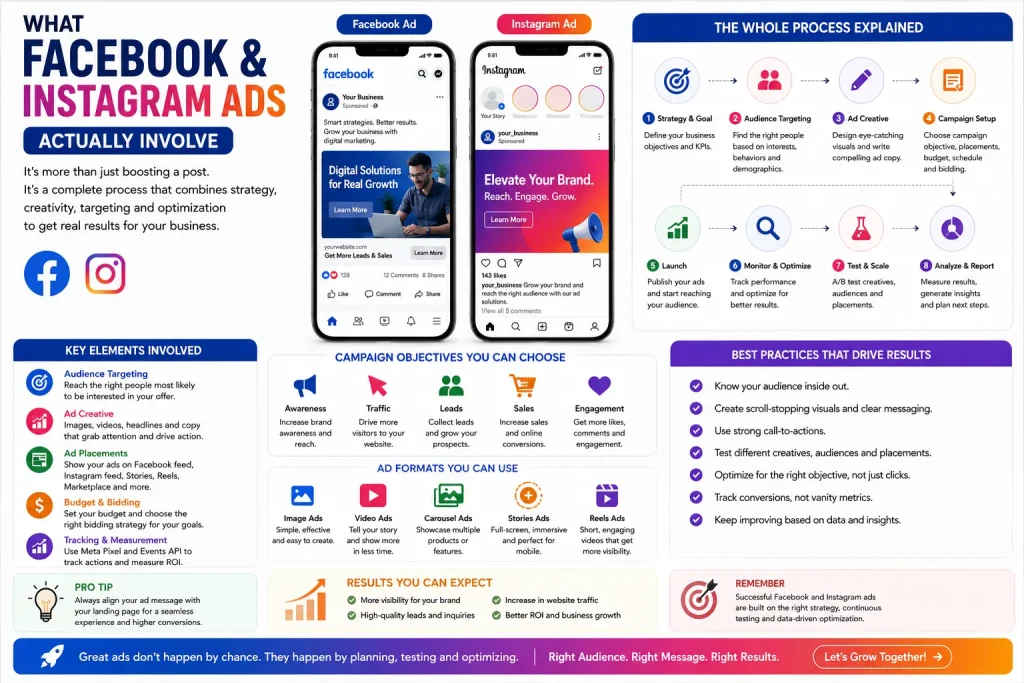
Facebook and Instagram Ads run through one shared system called Meta Ads Manager, since both platforms belong to the same parent company. A single campaign can be shown on Facebook feeds, Instagram feeds, Stories, Reels, and even Messenger, all from one dashboard.
A campaign is built in three layers. At the top is the campaign level, where you pick the goal, such as traffic, leads, or sales. Below that sits the ad set, where audience, budget, and placement decisions are made. At the bottom is the ad itself: the image, video, text, and button a person actually sees.
Getting results depends on all three layers working together. A great picture with the wrong audience will not sell anything, and a perfect audience with a boring ad gets scrolled past just as fast.
How Targeting Works Behind the Scenes
Good targeting is what separates profitable Facebook and Instagram Ads from wasted ones. Meta’s system uses signals like age, location, interests, and past shopping behavior to decide who sees a given ad, which is what allows a business to show a sari collection to women in a specific city instead of paying to reach the whole country.
There are three broad approaches worth knowing. Interest-based targeting reaches new people based on their hobbies and habits. Retargeting shows ads again to people who have already visited your website, which usually converts far better since these people already know you. Lookalike targeting takes your existing customers and finds new people who share similar traits, often the fastest way to scale a campaign that is already working.
Types of Campaigns You Can Run
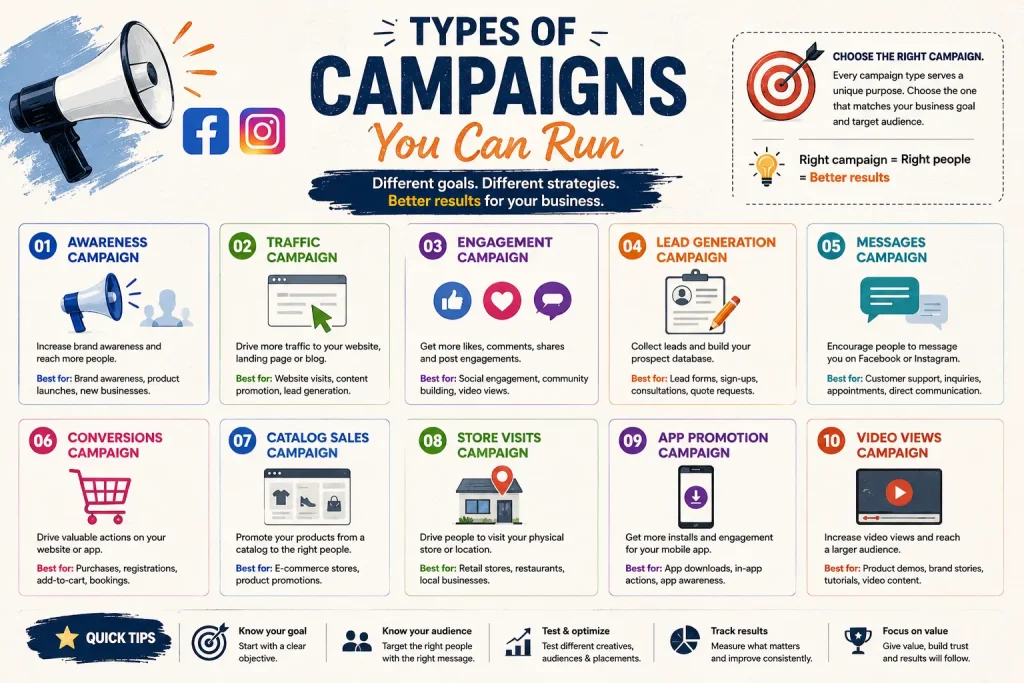
Not every business needs the same kind of Facebook and Instagram Ads campaign, and picking the wrong one is a common reason budgets get wasted. Awareness campaigns introduce a brand to as many relevant people as possible, suiting a new business that nobody has heard of yet.
Traffic and engagement campaigns push people toward a website or get them commenting and sharing, useful when the goal is visibility rather than an instant sale. Lead generation campaigns collect names, phone numbers, or emails directly inside the app, which works well for services like coaching or education.
Conversion campaigns are built purely to drive sales or sign-ups, and they rely heavily on proper tracking. Catalog sales campaigns, mostly used by online stores, automatically show the exact products a person has already viewed, one of the most effective ways to recover lost sales.
Why Creative Matters More Than Budget
A common mistake with Facebook and Instagram Ads is assuming a bigger budget alone fixes weak results. In reality, the image or video, known as the creative, is usually responsible for a bigger share of success than the budget itself. People scroll fast, and an ad has less than two seconds to stop the thumb.
Video generally performs better than static images because it holds attention longer and shows the product in action rather than just describing it. Text on the ad should be simple and direct, speaking to a real problem the viewer has rather than sounding like a corporate brochure.
Testing multiple versions of the same ad, with different images, headlines, or calls to action, is how experienced advertisers find out what actually resonates with an audience instead of guessing.
Tracking, Pixels, and Why They Matter
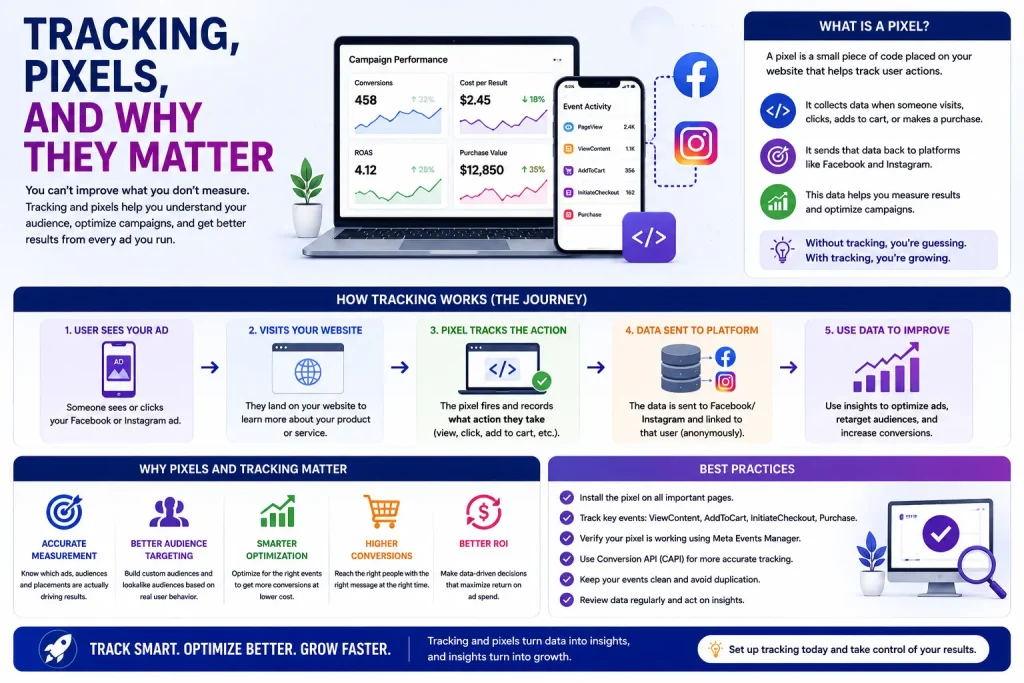
None of this works well without proper tracking. The Meta Pixel is a small piece of code placed on a website that quietly reports back which visitors came from an ad and what they did once they landed there, whether that was viewing a product or completing a purchase.
Without a pixel installed correctly, Facebook and Instagram Ads run essentially blind. Meta cannot learn who is converting, so it cannot optimize delivery toward people likely to buy. This is one of the most overlooked technical steps and one of the main reasons two businesses can spend the exact same budget and get completely different results.
Server-side tracking, known as the Conversions API, has become increasingly important too, since browser privacy changes have made pixel-only tracking less reliable on its own.
Benefits of Running Ads the Right Way
When Facebook and Instagram Ads are managed properly, the advantages go well beyond a short-term spike in sales. Precise targeting means the budget is spent reaching people who are genuinely likely to be interested, rather than a broad, uninterested crowd.
The detailed reporting inside Ads Manager shows exactly which age group, location, or device is performing best, allowing the budget to shift toward what is actually working instead of staying stuck in guesswork. Retargeting brings back visitors who were close to buying but got distracted, often at a lower cost than chasing brand-new customers.
Perhaps most importantly, a properly built campaign gets smarter over time. As more data comes in, Meta’s system refines who it shows the ad to, which is why campaigns given a fair testing period often improve steadily rather than staying flat.
How This Connects to Your Other Marketing
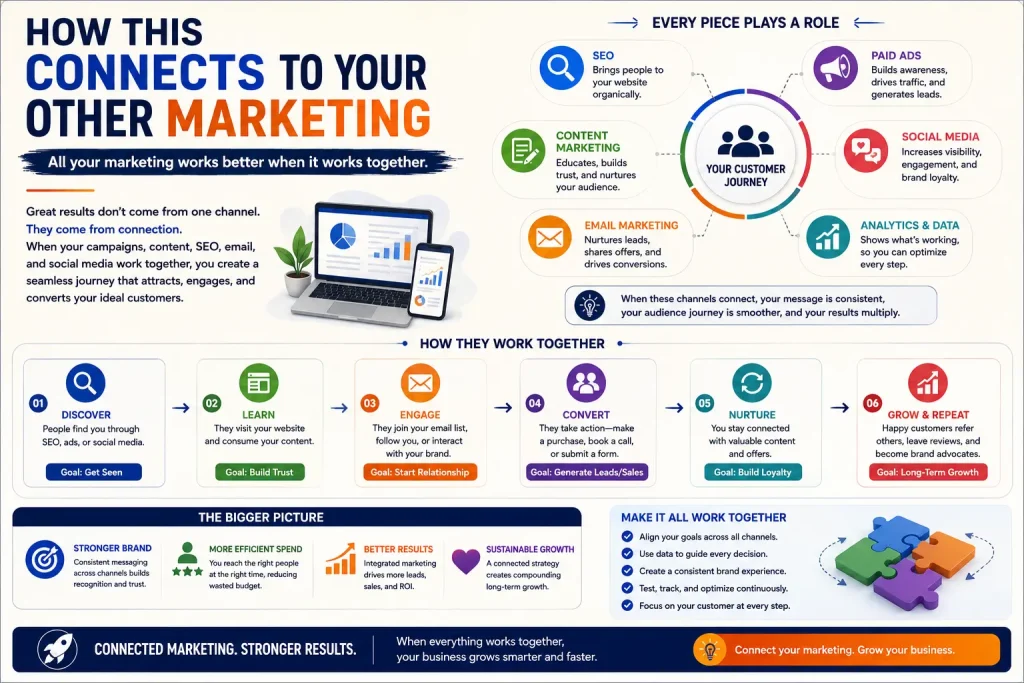
Facebook and Instagram Ads rarely work well in isolation. They perform best when paired with a website that is fast, clear, and built to convert, since sending paid traffic to a slow or confusing page wastes every rupee spent getting someone there.
They also connect closely with SEO and content marketing. A visitor who sees an ad but does not buy immediately will often search the brand name later, and a strong organic presence at that moment builds the trust that closes the sale. A business already active with social media marketing and consistent branding tends to see stronger ad performance too, since the audience already recognizes the name before the ad appears.
Treating Facebook and Instagram Ads as one piece of a wider strategy, rather than a standalone fix, is what separates businesses that grow steadily from those that see a short burst and then plateau.
Frequently Asked Questions
1. How much budget do I need to start with Facebook and Instagram Ads? There is no fixed number that works for everyone, but most businesses start with a modest daily budget and increase it once they see which audience and creative combination performs best.
2. How long does it take to see results? Meta’s system typically needs a short learning period, often around a week, to gather enough data before performance settles into a stable pattern.
3. Is Instagram better than Facebook for ads, or the other way around? Neither is universally better. The right placement depends on where your audience spends their time, and most campaigns perform best when both platforms are used together.
4. Do I need a professional video, or can photos work? Photos can absolutely work, especially when they look natural rather than overly polished. What matters most is that the creative grabs attention and speaks to a real problem the viewer has.
5. Why did my ad get rejected or restricted? Meta has strict advertising policies around text on images, misleading claims, and certain restricted categories. Reviewing these guidelines before launching avoids unnecessary delays.
6. Can I run ads without a website? Yes, lead generation campaigns and ones pointing to a WhatsApp or Messenger chat can work without a website, though a website generally builds more long-term trust and tracking ability.
Conclusion
Facebook and Instagram Ads look simple from the outside, but small mistakes in targeting, tracking, or creative quietly add up to wasted budget. A poorly targeted audience, a missing pixel, or an ad that fails to grab attention in the first two seconds can each be the difference between a campaign that pays for itself and one that does not.
Getting it right means treating every layer, from structure to creative testing to tracking, as equally important and adjusting based on real data rather than guesswork. If your current Facebook and Instagram Ads feel like more guesswork than strategy, it may be time to have someone take a proper look and build a plan that turns ad spend into real, measurable growth.
contact us-Contact